
Climate Control Designed for Homes Under Construction
New Construction HVAC Installation in Syracuse for residential building projects requiring equipment sizing, duct layout, and system coordination with builders
Proper HVAC system design for new construction prevents the uneven temperatures, excessive energy costs, and premature equipment failures that plague homes with undersized furnaces or poorly routed ductwork. Bluesky Heating and Air works with builders, contractors, and project teams throughout Syracuse, Roy, Ogden, Clearfield, Salt Lake City, and Layton to install heating, cooling, and ventilation systems that match building specifications, local code requirements, and homeowner comfort expectations. New construction installation involves load calculations based on square footage and insulation values, duct design that delivers balanced airflow to every room, equipment selection matching efficiency targets and budget parameters, and installation scheduling coordinated with framing, electrical, and finish work phases.
Load calculations determine precisely how much heating and cooling capacity your home requires based on wall insulation, window area, ceiling height, and orientation to sun exposure rather than guessing equipment size from square footage alone. Undersized systems run constantly without reaching comfortable temperatures, while oversized equipment cycles on and off too frequently, wearing components prematurely and failing to control humidity properly. Duct layout considers room usage patterns, structural obstacles, and shortest practical pathways to minimize air resistance and temperature loss between equipment and living spaces.
Request a new construction HVAC proposal during the design phase to coordinate equipment placement, ductwork routing, and installation timing with your building schedule.
What New Construction HVAC Installation Includes
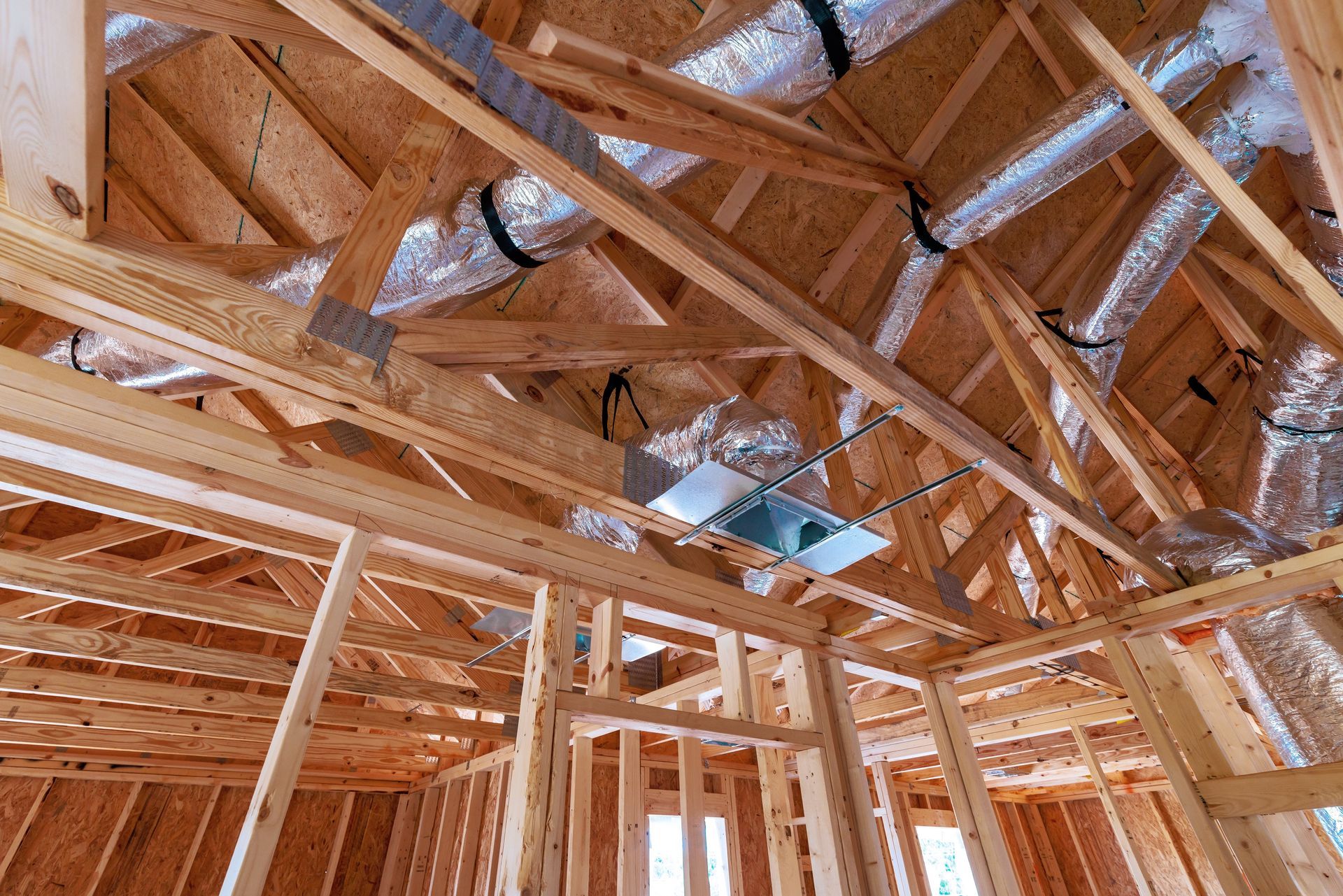
New construction HVAC installation begins with equipment sizing calculations and duct design during the planning phase, continues with rough-in work after framing and before drywall, and concludes with equipment startup and system balancing after interior finishes are complete. Rough-in includes furnace and air handler placement, refrigerant line installation for air conditioning and heat pump systems, supply and return duct installation throughout the home, condensate drain routing, electrical connections, and gas line hookups for furnaces.
After final installation and startup, every room receives consistent airflow matched to its size and heating load, the system reaches thermostat settings without excessive runtime, and equipment operates quietly without vibration transferred through ductwork or mounting points. You notice balanced temperatures between upstairs and downstairs zones, no hot or cold spots near windows or exterior walls, and air changes that happen frequently enough to prevent stuffiness without creating drafts.
New construction projects allow integration of indoor air quality products like whole-home humidifiers and advanced filtration systems, zoning controls for multi-level homes, and high-efficiency equipment selections that would be difficult or costly to retrofit into existing homes. Installation follows manufacturer specifications and local building code requirements, with inspections completed before drywall covers ductwork and connections.
Questions Builders and Homeowners Ask About New Construction HVAC
Coordinating HVAC installation with construction timelines and budget constraints requires clear communication about equipment options and scheduling requirements.
When should HVAC planning begin for a new construction project?
System design should start during architectural planning so duct chases, equipment rooms, and utility connections can be incorporated into structural plans rather than worked around existing framing later.
How is HVAC equipment sized for new construction homes in Syracuse?
Manual J load calculations account for insulation R-values, window solar heat gain, ceiling height, duct length, and local climate data to determine precise heating and cooling requirements rather than estimating from square footage.
What happens if ductwork design doesn't account for airflow requirements?
Undersized ducts create excessive air velocity and noise, restrict airflow to distant rooms, increase static pressure that wears blower motors prematurely, and prevent the system from delivering its rated heating and cooling capacity.
How does new construction HVAC installation coordinate with other trades?
Rough-in work happens after framing, plumbing, and electrical rough-ins but before insulation and drywall, requiring coordination with the general contractor to avoid scheduling conflicts that delay construction progress.
What HVAC options make sense during new construction that would be difficult to add later?
Zoned temperature control with multiple thermostats, whole-home ventilation systems, advanced duct sealing methods, and equipment placement in conditioned spaces rather than unconditioned attics all become significantly more complex and expensive to retrofit after construction finishes.
Bluesky Heating and Air coordinates with construction teams to design and install HVAC systems that meet performance expectations, code requirements, and project timelines. Call (801) 725-5573 to discuss system design and installation for your upcoming construction project.