
Targeted Climate Control Without Ductwork Limitations
Mini Split Installation in Roy for additions, garages, basements, and spaces where ducted systems prove impractical
Rooms added after initial home construction, detached garages converted to workshop or living space, and basements finished without existing ductwork all present challenges for extending central HVAC coverage economically. Mini split systems provide heating and cooling to these areas without requiring duct installation, using refrigerant lines connecting outdoor condensers to indoor air handlers mounted on walls or ceilings. Bluesky Heating and Air installs mini splits across Roy for applications where running ductwork involves extensive structural work, cost barriers, or spaces requiring independent temperature control separate from the main home system.
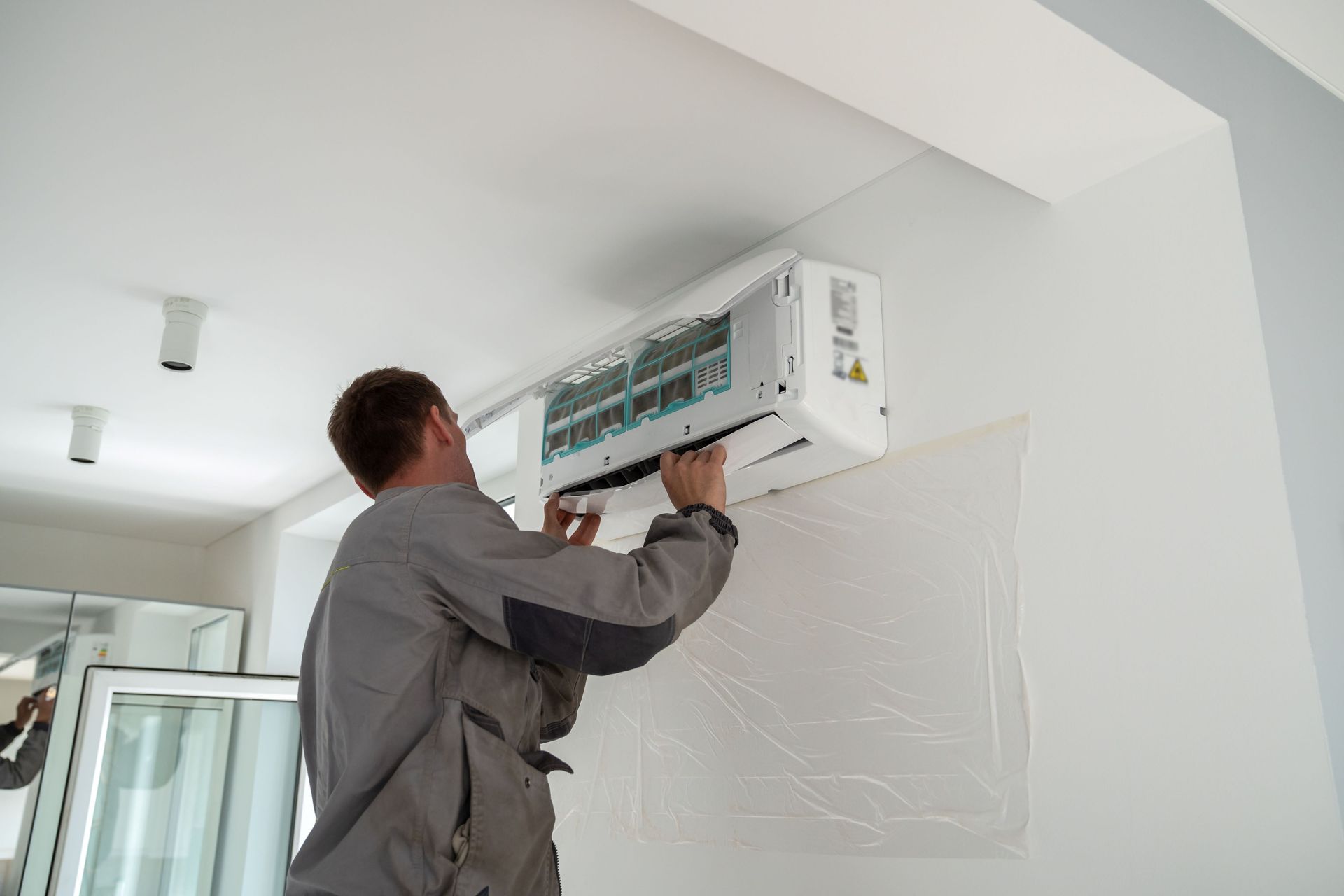
Installation involves mounting the outdoor condenser unit on an exterior wall or ground pad, running refrigerant lines and electrical wiring through a small penetration to the indoor location, and positioning the air handler where it distributes conditioned air effectively without obstructing room use. Energy-efficient operation results from variable-speed compressors that adjust output based on temperature demand rather than cycling on and off at full capacity, reducing energy consumption during mild conditions when partial heating or cooling suffices.
Schedule a mini split installation estimate to evaluate placement options and system sizing for your project.
What Mini Splits Provide That Ducted Systems Cannot
Zoning benefits allow each indoor unit to operate independently with its own temperature setting, letting occupants condition only the spaces in use rather than heating or cooling the entire structure to accommodate one area. Multi-zone systems connect several indoor units to a single outdoor condenser, supporting different temperature preferences in bedrooms, home offices, or workshop areas without affecting comfort elsewhere. Clean installation requires only a three-inch penetration through the exterior wall for refrigerant lines and wiring, avoiding the ceiling and wall openings needed for ductwork installation in finished spaces.
After installation completes, each air handler responds to its own remote control or wall-mounted thermostat, adjusting fan speed and temperature output independently from other zones or the main home HVAC system. Temperature control becomes more precise since mini splits condition smaller areas rather than attempting to balance airflow across large duct runs, and rooms reach set points faster with less energy waste from duct losses or airflow imbalances. Modern system designs blend into interior spaces with slim profiles and quiet operation, eliminating the noise associated with window units or portable air conditioners.
Mini splits function as primary heating and cooling systems in homes without existing ductwork or as supplemental systems targeting specific areas that central equipment fails to condition adequately. Heat pump models provide both heating and cooling from the same equipment, though extremely cold outdoor temperatures may reduce heating efficiency compared to dedicated furnaces, depending on the specific model's low-temperature performance ratings.
Questions About Mini Split Systems
Property owners considering mini splits often want clarity on how these systems differ from traditional HVAC equipment and what installation involves for various space types.
What spaces benefit most from mini split installation?
Additions without duct access, converted garages lacking climate control, finished basements where duct extensions prove costly, and rooms requiring independent temperature settings all suit mini split applications better than extending existing ductwork.
How does energy efficiency compare to central HVAC systems?
Variable-speed compressors and elimination of duct losses allow mini splits to achieve efficiency ratings exceeding many traditional systems, particularly when conditioning spaces far from the main air handler or in areas with minimal insulation.
What does installation involve for multi-zone systems in Roy homes?
Single outdoor units support up to four or five indoor air handlers depending on capacity, with refrigerant lines running from the condenser to each interior location through separate penetrations or shared pathway chases where accessible.
How much maintenance do mini splits require?
Annual cleaning of indoor unit filters and periodic coil cleaning maintain performance, while outdoor condensers need seasonal debris removal and refrigerant level verification to prevent efficiency loss or component wear.
Can mini splits provide adequate heating during Utah winters?
Heat pump mini splits operate effectively down to outdoor temperatures near zero degrees Fahrenheit, though heating capacity decreases as temperatures drop, sometimes requiring supplemental heat sources during the coldest periods for spaces with high heating demands.
Bluesky Heating and Air assesses space heating and cooling requirements, evaluates placement for optimal air distribution, and recommends single or multi-zone configurations based on your property layout and comfort priorities. Arrange a consultation to determine whether mini split installation fits your specific application and budget considerations.