
Indoor Air That Stays Cleaner Year-Round
Air Filtration Systems in Roy for households managing dust accumulation, airborne debris, and indoor air quality concerns
Year-round airborne particles from pollen, dust, pet dander, and outdoor pollutants circulate through HVAC systems, settling on surfaces and moving through living spaces each time heating or cooling operates. Bluesky Heating and Air integrates filtration systems with existing furnaces and air handlers across Roy, installing media filters, electronic air cleaners, or HEPA filtration units that capture particulate matter before it enters ductwork and supply registers. Standard one-inch filters trap larger debris but allow finer particles to pass through, while advanced filtration options remove contaminants down to sub-micron sizes that affect households sensitive to allergens or concerned about indoor cleanliness.
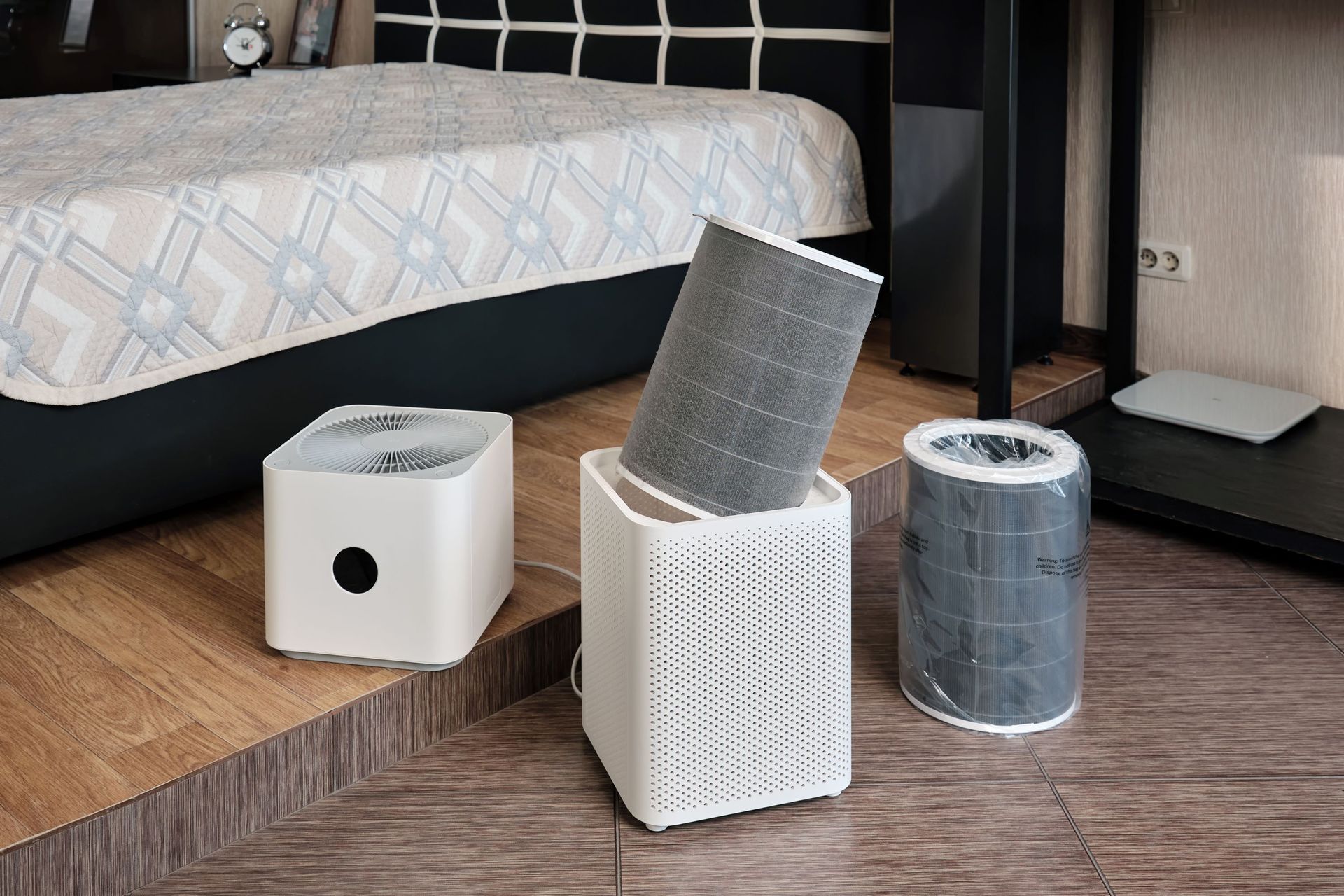
Filtration differences center on media thickness, filtration efficiency ratings, and whether systems use passive fiber media or active electronic charging to capture particles. Thicker media filters provide more surface area for trapping debris without restricting airflow, while electronic cleaners use charged plates that attract particles electrostatically, requiring periodic cleaning rather than disposable filter replacement.
Learn more about filtration system options and integration with your current HVAC equipment.
What Improved Filtration Accomplishes Functionally
Filtration systems install in the return air pathway before air reaches the blower, ensuring all air circulated through heating and cooling equipment passes through the filtration media. Media filters fit into dedicated cabinets that replace standard filter slots, accommodating filters four to six inches thick compared to standard one-inch disposable filters. Electronic air cleaners mount similarly but use washable collection cells rather than replaceable media, requiring cleaning every few months depending on household conditions and system runtime.
After installation, dust accumulation on furniture and surfaces decreases noticeably, supply registers remain cleaner between maintenance visits, and indoor air carries fewer visible particles when sunlight angles through windows. Households with pets or seasonal allergy concerns report less frequent cleaning needs and reduced particulate visibility, though filtration alone does not eliminate all sources of indoor contamination like cooking byproducts, humidity-related mold, or off-gassing from materials and furnishings.
Filtration upgrades work alongside existing HVAC systems without requiring ductwork modifications in most cases, though airflow verification ensures added filtration does not restrict air movement enough to reduce heating and cooling efficiency. Bluesky Heating and Air matches filtration capacity to blower capability, preventing static pressure increases that force equipment to work harder or reduce airflow below design levels.
Air Filtration Questions Homeowners Ask
Choosing filtration systems involves understanding how different technologies function and what maintenance requirements they introduce into regular HVAC care routines.
What distinguishes media filters from electronic air cleaners?
Media filters trap particles in dense fiber material that requires replacement every six to twelve months, while electronic cleaners use charged plates that capture particles electrostatically and need periodic washing rather than disposal.
How does filtration affect airflow and system efficiency?
Properly sized filtration maintains airflow within design specifications, but excessively restrictive filters or neglected media replacement can reduce air movement enough to decrease heating and cooling performance across Roy properties.
What particle sizes do advanced filters capture?
HEPA and high-efficiency media filters remove particles smaller than one micron, including fine dust, pollen fragments, and some bacteria, while standard filters primarily capture larger debris like lint and visible dust particles.
How often do filtration systems require maintenance?
Media filters need replacement based on household conditions and system runtime, typically ranging from six months in high-use or pet-owning households to twelve months in cleaner environments, while electronic cleaners require washing every two to four months.
Can filtration systems integrate with older HVAC equipment?
Most furnaces and air handlers accommodate filtration upgrades through cabinet installation in the return plenum, though very old systems with limited blower capacity may require airflow testing to confirm compatibility without performance loss.
Bluesky Heating and Air evaluates current HVAC configurations to recommend filtration systems that improve indoor air quality without compromising equipment performance or requiring extensive modifications. Contact us to discuss filtration options suited to your household needs and system specifications.